
The Difference Between Coaching Talent and Coaching People
Why the best coaches don’t just develop athletes, they develop human beings.

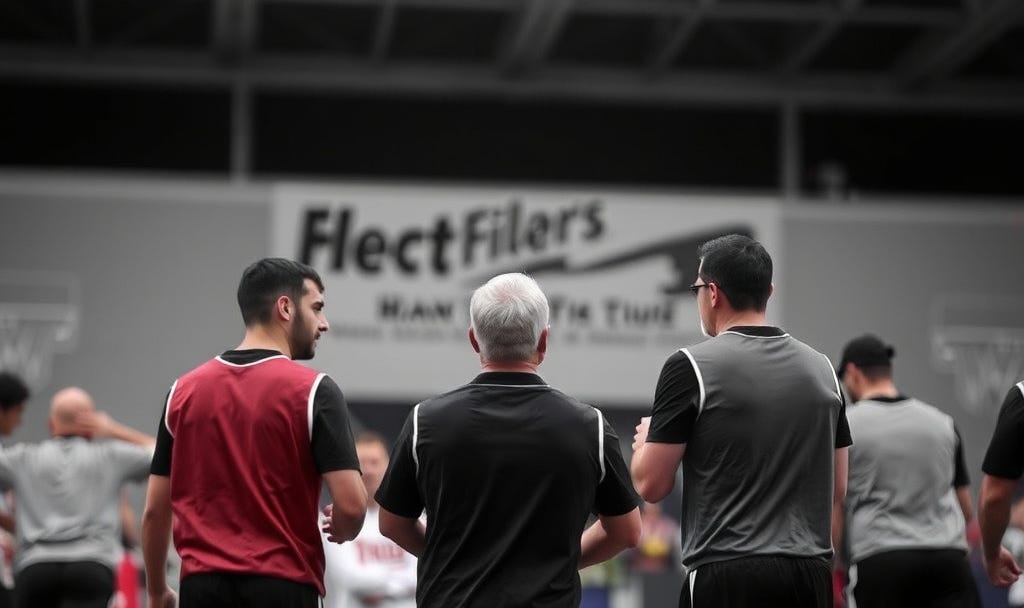
There is a moment every coach experiences if they stay in the profession long enough. It does not happen during a championship celebration or after a record breaking performance. It happens quietly, often after a tough loss, a difficult conversation, or a season that did not go the way you hoped.
That moment is when you realize something important.
Coaching is not really about talent.
It is all about people.
When most of us start coaching, we think the job is about developing athletes. We think it is about improving times, sharpening skills, running better practices, and designing smarter training plans. We study technique. We analyze film. We read books about periodization and performance.
We believe that if we just learn enough about the sport, success will follow.
And to be fair, talent matters. Skill development matters. Strategy matters. Coaching athletes to perform at a high level absolutely matters.
But after enough seasons on the pool deck, on the sideline, or in the gym, something becomes clear.
The coaches who make the biggest impact are not simply the ones who know the most about the sport.
They are the ones who understand people.
There is a big difference between coaching talent and coaching people, and once you understand that difference, it changes everything about how you lead a team.
Coaching talent focuses on performance. Coaching people focuses on growth.
When a coach focuses only on talent, the goal becomes improvement in the measurable areas of the sport. Faster times. Stronger performances. Better statistics. The focus is on what the athlete can produce.
But when a coach focuses on people, the goal shifts.
Now the focus is on who the athlete is becoming.
Are they learning discipline?
Are they developing confidence?
Are they learning how to handle adversity?
Are they becoming someone their teammates can count on?
These are questions that go far beyond performance, but they are the questions that ultimately shape the kind of person an athlete becomes.
One of the biggest lessons I have learned as a coach is that athletes rarely remember the exact sets you gave them in practice. They rarely remember the drills or the workouts.
But they always remember how you made them feel.
They remember whether you believed in them.
They remember whether you listened to them.
They remember whether you saw them as more than just a performer in a uniform.
Coaching talent can produce good athletes.
Coaching people produces confident young adults.
The difference between those two outcomes is enormous.
Another difference between coaching talent and coaching people shows up in how coaches respond to struggle.
If your focus is only on talent, struggle becomes frustrating. When athletes do not perform the way you expect, it can feel like a failure of preparation or effort. The focus becomes fixing the performance problem as quickly as possible.
But when you coach people, struggle becomes an opportunity.
You begin to see setbacks as moments where athletes learn resilience. A tough race, a missed shot, a mistake in a game, or a disappointing result becomes a chance to teach something deeper.
How do you respond when things do not go your way?
How do you handle pressure?
How do you stay committed when improvement feels slow?
Those lessons last far longer than any win or loss.
The truth is that every coach loves coaching talent.
Talent makes the job easier. Talent produces results. Talent makes practices look smoother and games look more impressive.
But coaching people requires something different.
It requires patience.
It requires empathy.
It requires the ability to see potential in someone long before they see it in themselves.
Some of the most meaningful moments in coaching do not come from the most talented athletes on your team. They come from the athletes who struggle, who doubt themselves, who need someone to believe in them when they are not sure they belong.
Those are the athletes who remind you what coaching is really about.
I have seen athletes arrive on a team unsure of themselves. Quiet. Nervous. Unsure if they are good enough to be there.
They may not be the fastest or the strongest. They may not have the natural ability that others have.
But over time, something begins to change.
They gain confidence.
They begin to take ownership of their training.
They start encouraging teammates.
They step into leadership roles they never imagined themselves holding.
Those moments are not the result of coaching talent.
They are the result of coaching people.
When you coach people, you start paying attention to things that statistics will never capture.
You notice the athlete who stays late to help clean up equipment.
You notice the teammate who encourages someone after a difficult practice.
You notice the quiet leader who lifts the culture of the entire team simply through their attitude and work ethic.
Those things matter more than most people realize.
Team culture is not built through talent alone. It is built through character.
And character grows when coaches invest in people, not just performance.
The best teams I have been around were not always the most talented teams.
They were the teams where athletes cared about each other.
They were the teams where older athletes mentored younger ones.
They were the teams where leaders stepped up to protect the culture of the group.
Those teams understood something powerful.
They were part of something bigger than themselves.
And that kind of culture rarely happens by accident. It happens because coaches choose to invest in people.
Coaching people also means understanding that athletes carry things into practice that have nothing to do with sports.
They bring stress from school.
They bring challenges from home.
They bring doubts, fears, and insecurities that most adults forget teenagers are navigating every single day.
A coach who focuses only on talent might miss those things entirely.
But a coach who focuses on people learns to see the whole athlete.
Sometimes the most important moment of practice is not the hardest set or the most intense drill.
Sometimes it is a simple conversation.
Sometimes it is pulling an athlete aside and asking a question that has nothing to do with performance.
How are you doing today?
Is everything okay?
Do you need anything from me?
Those moments build trust.
And trust is the foundation of great coaching.
Athletes will work incredibly hard for coaches they trust.
They will push themselves through difficult practices. They will stay committed when progress is slow. They will fight for their teammates.
Not because they are afraid of letting the coach down, but because they know the coach cares about them as people.
That kind of trust is powerful.
It turns teams into communities.
It turns coaches into mentors.
And it turns sports into something far more meaningful than competition.
Over time, the definition of success begins to change.
Of course, winning is still exciting. Championships are special. Records and achievements should be celebrated.
But the moments that stay with you as a coach are often different.
They are the messages you receive years later from former athletes.
They are the updates about college, careers, and families.
They are the moments when someone tells you that something they learned on your team helped them through a difficult time in their life.
Those moments remind you that coaching was never just about the sport.
It was about helping people grow.
Every coach has the opportunity to decide what kind of coach they want to be.
You can focus on talent.
Or you can focus on people.
Coaching talent might produce faster times or better statistics in the short term.
But coaching people produces something much more meaningful.
It produces confident young adults.
It produces leaders.
It produces people who understand the value of hard work, resilience, and supporting those around them.
And in the long run, that impact reaches far beyond any scoreboard.
The truth is that most athletes will eventually stop competing. Their playing days will come to an end. The medals and trophies will fade into memories.
But the lessons they learn about who they are and how they treat others will stay with them for the rest of their lives.
That is the real power of coaching.
And that is the difference between coaching talent and coaching people.
Lots of truth in here. Got me thinking…maybe it’s one of the reasons coaches (and teachers) are struggling more and more. The “why” rarely has to do with money or accolades. It has to do with making a difference in the lives they touch. Parents are pushing back more and more against accountability, making it harder to coach the person and easier to coach the result. In school settings, many teachers I know are told they can’t fail kids anymore. Instead of holding kids accountable, the entire system chooses the result (passing) over the lesson (accountability).